Sentra
Empowering search-and-rescue teams through data-driven, human-centered training tools.
My Role
UX Research, UX Strategy
Project Type
Automotive infotainment UX
Tools Used
Figma, Rhino, Keyshot, Photoshop, Illustrator
Duration
10 Weeks
Overview
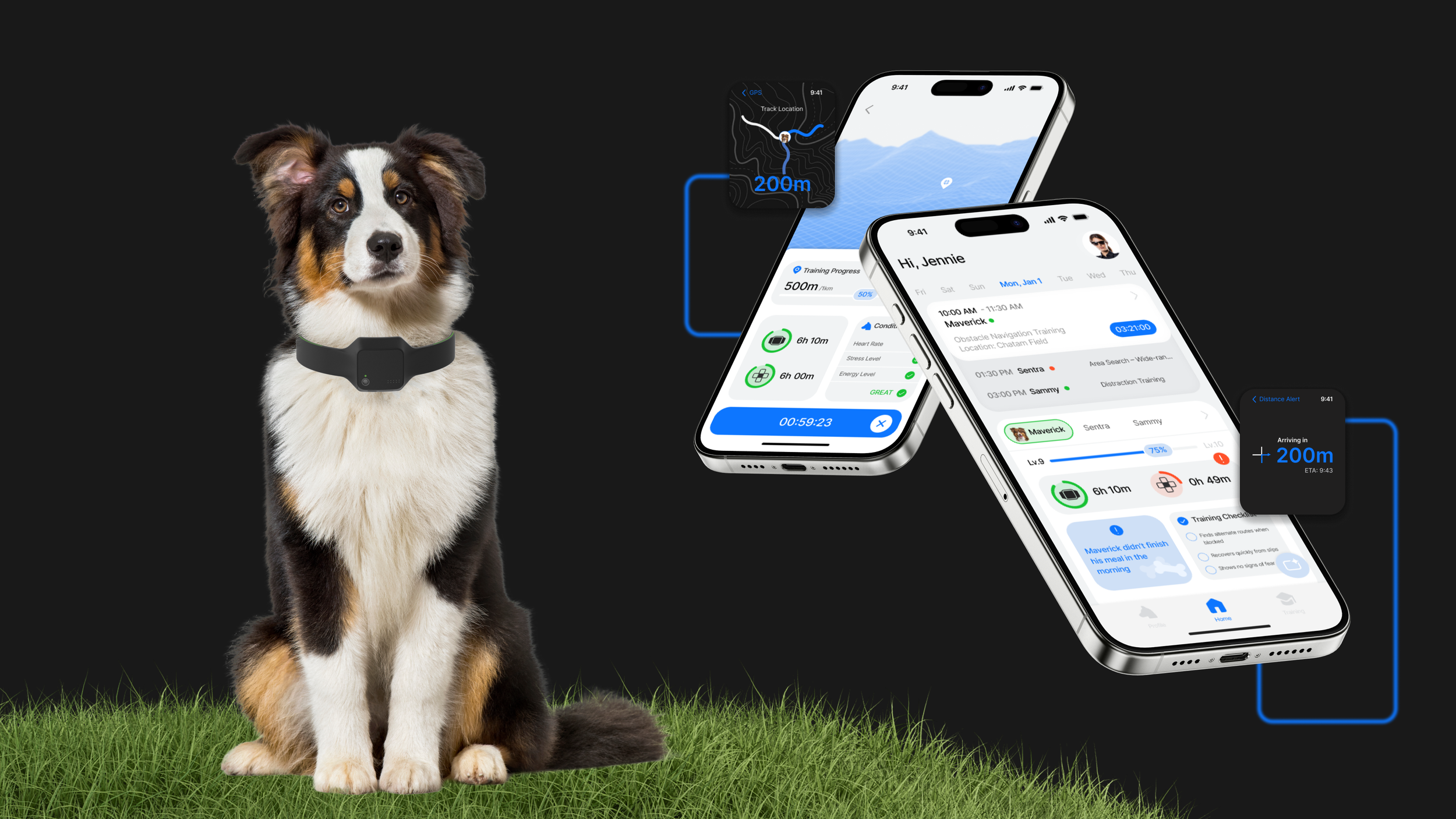
Sentra is an AI-enhanced training ecosystem designed to support search-and-rescue (SAR) dog handlers.
By combining a smart collar, scent-delivery drone, and mobile app, it simplifies how handlers guide, monitor, and analyze training sessions—enhancing efficiency and the emotional connection between human and dog.
Background
Search-and-rescue dogs are essential in disaster response, yet their training remains slow, costly, and heavily manual.
Handlers lack real-time feedback and must manage both the dog and the environment under pressure.
Sentra began with a key question: How can technology assist without replacing instinct?
Design Process
Initial Thinking
Design an assistive system that empowers handlers through data-driven, real-time insights.
Target Users
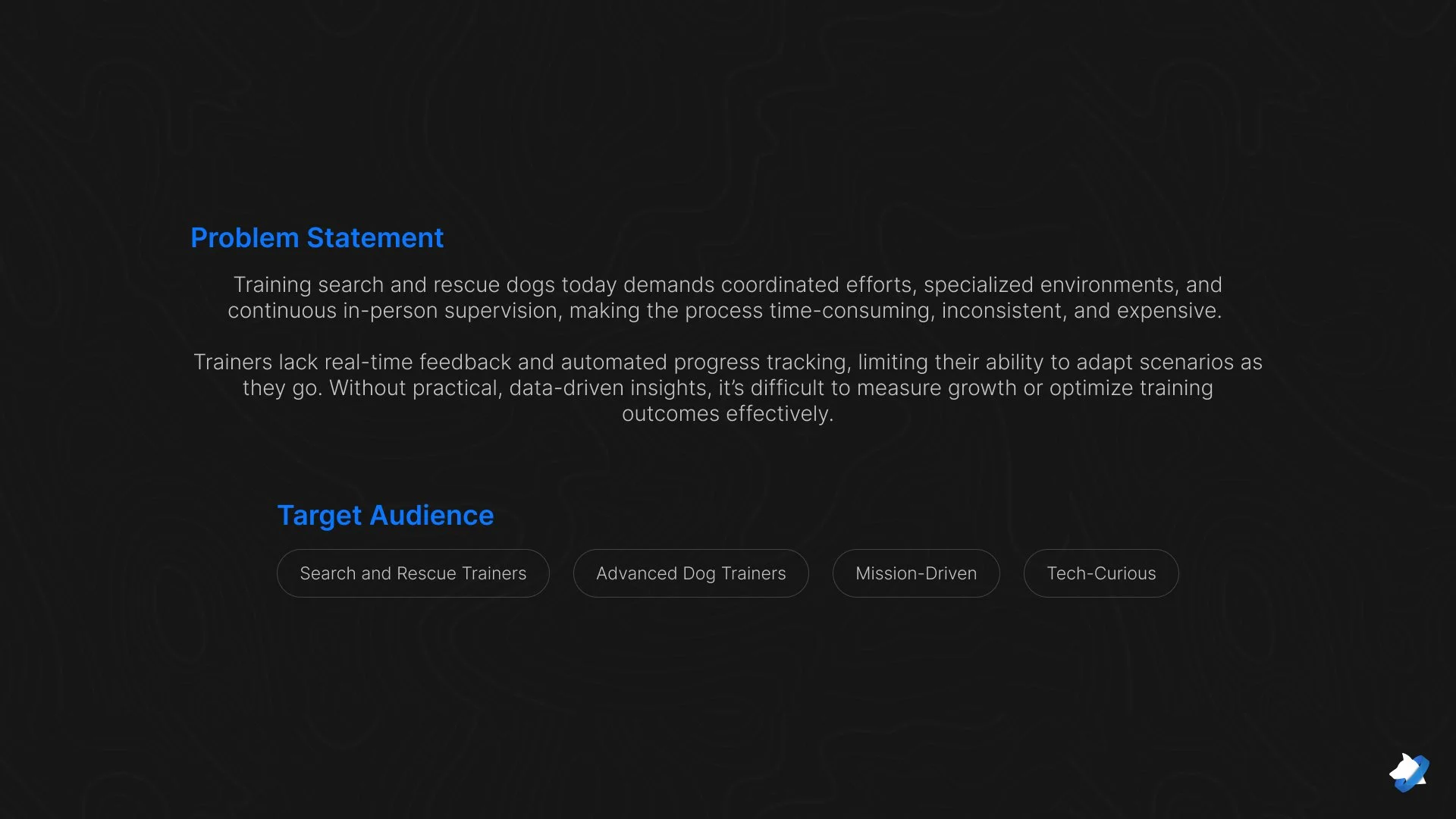
Professional SAR handlers and advanced dog trainers who need measurable progress tracking and situational awareness.
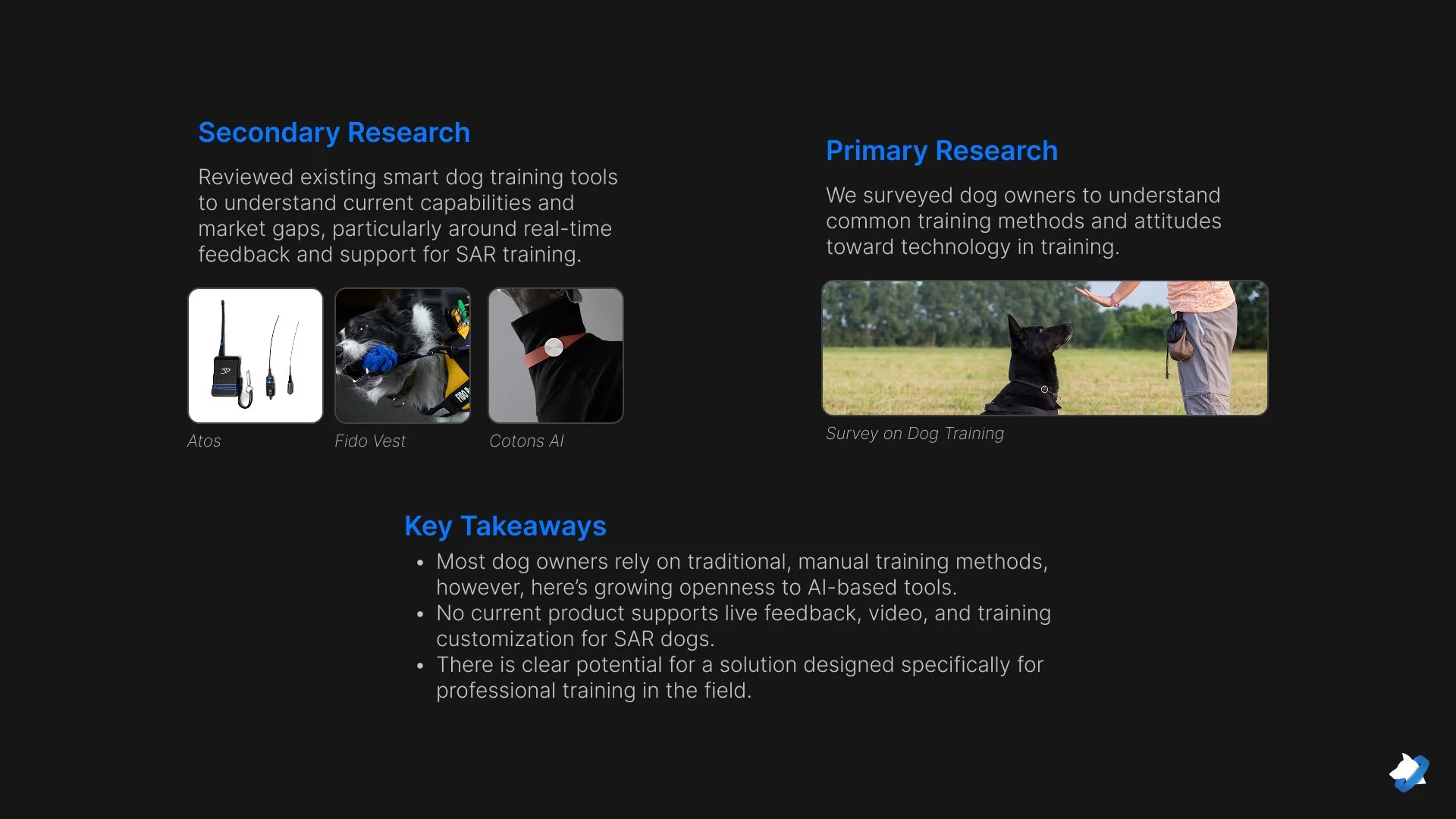
Field Observation | Handler Interviews | Wizard of Oz Testing | Comparative Product Analysis
Research Methods
User Research
Pain Points – Handlers
“Training is too time-consuming without automation.”
“I can’t tell how my dog performs until after the session.”
“It’s hard to balance command, observation, and documentation at once.”
Insights
Handlers need minimal setup and live data to adjust training on the fly.
The system must visualize feedback simply, not overwhelm with metrics.
Support should feel like collaboration, not control.
Challenge
Problem Statement
How might we create an AI-supported system that improves SAR dog training through clarity, feedback, and emotional understanding?
Goal
To design a synchronized physical–digital experience that enhances efficiency and preserves the human–dog bond.
Concept Development
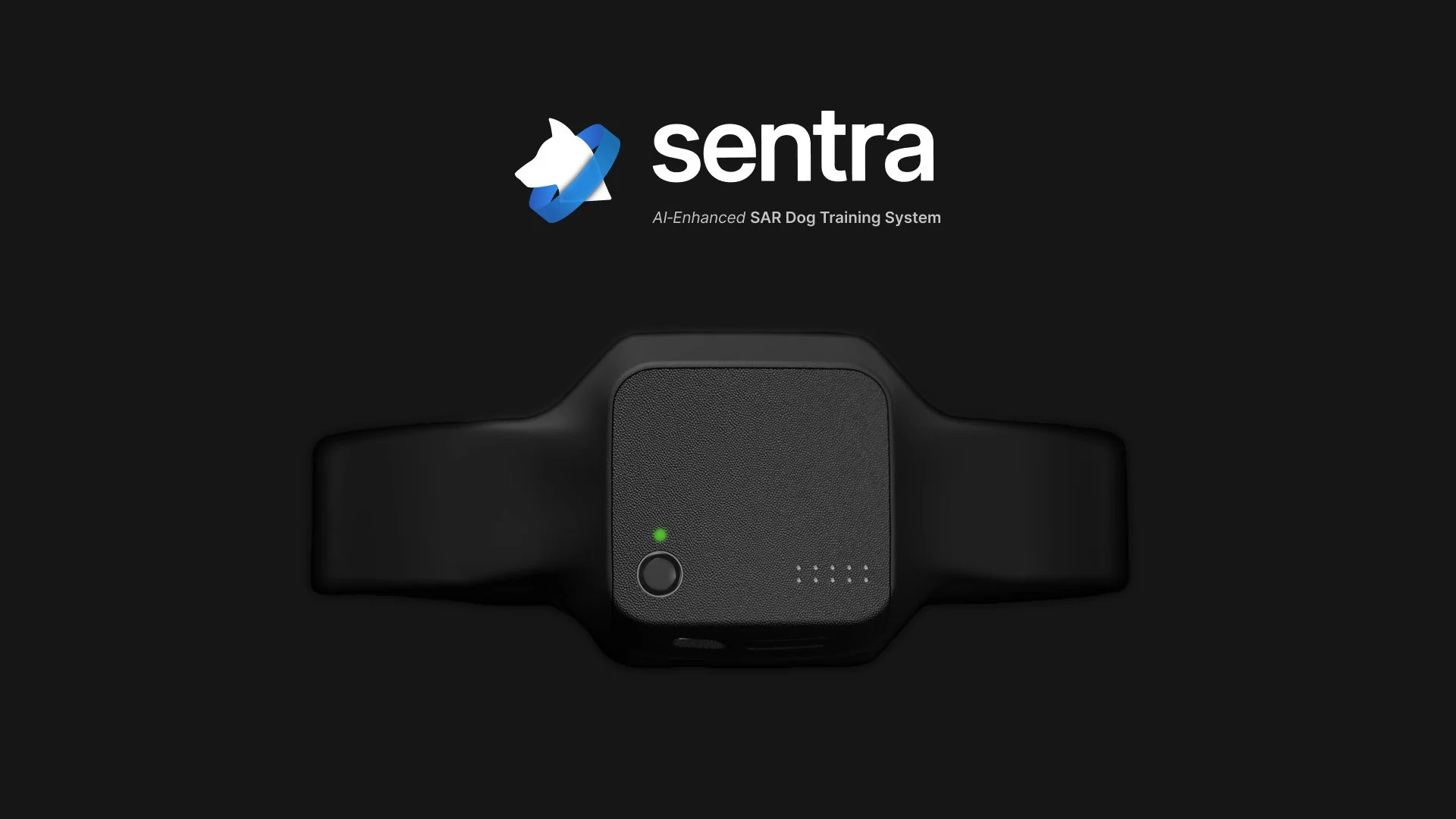
Sentra Collar
Monitors performance, stress, and motion with built-in sensors and camera.
Sentra Scout Drone
Deploys scent samples autonomously and provides aerial footage for review.
Sentra App
Displays live data, visualizes progress, and delivers AI-guided recommendations in real time.
Prototyping & Testing
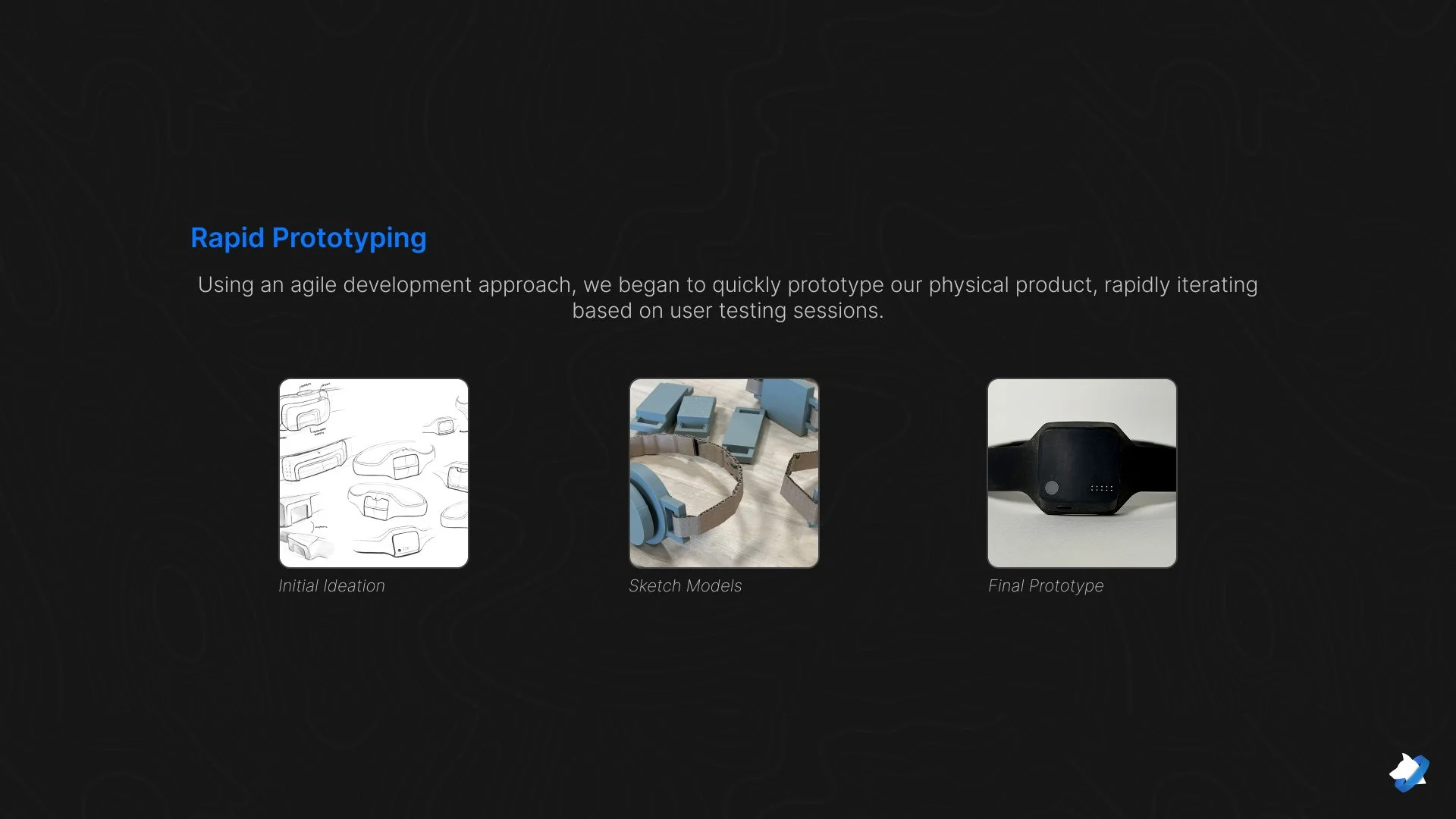
Methods
Low- to high-fidelity prototyping | Field scenario simulation | Iterative UI testing
Key Learnings
Simplified visuals improved comprehension during movement.
Smart alerts were more effective than constant monitoring.
Data summaries encouraged reflection after sessions.
Outcome
A functional digital prototype with synchronized collar–drone interactions and a mobile UI optimized for outdoor readability.
Experience Design
Core Principles
Clarity | Efficiency | Empathy
The Sentra interface focuses on what matters most: the dog’s condition and the handler’s decision-making.
Visual calmness, minimal color distractions, and tiered feedback ensure usability in any field condition.
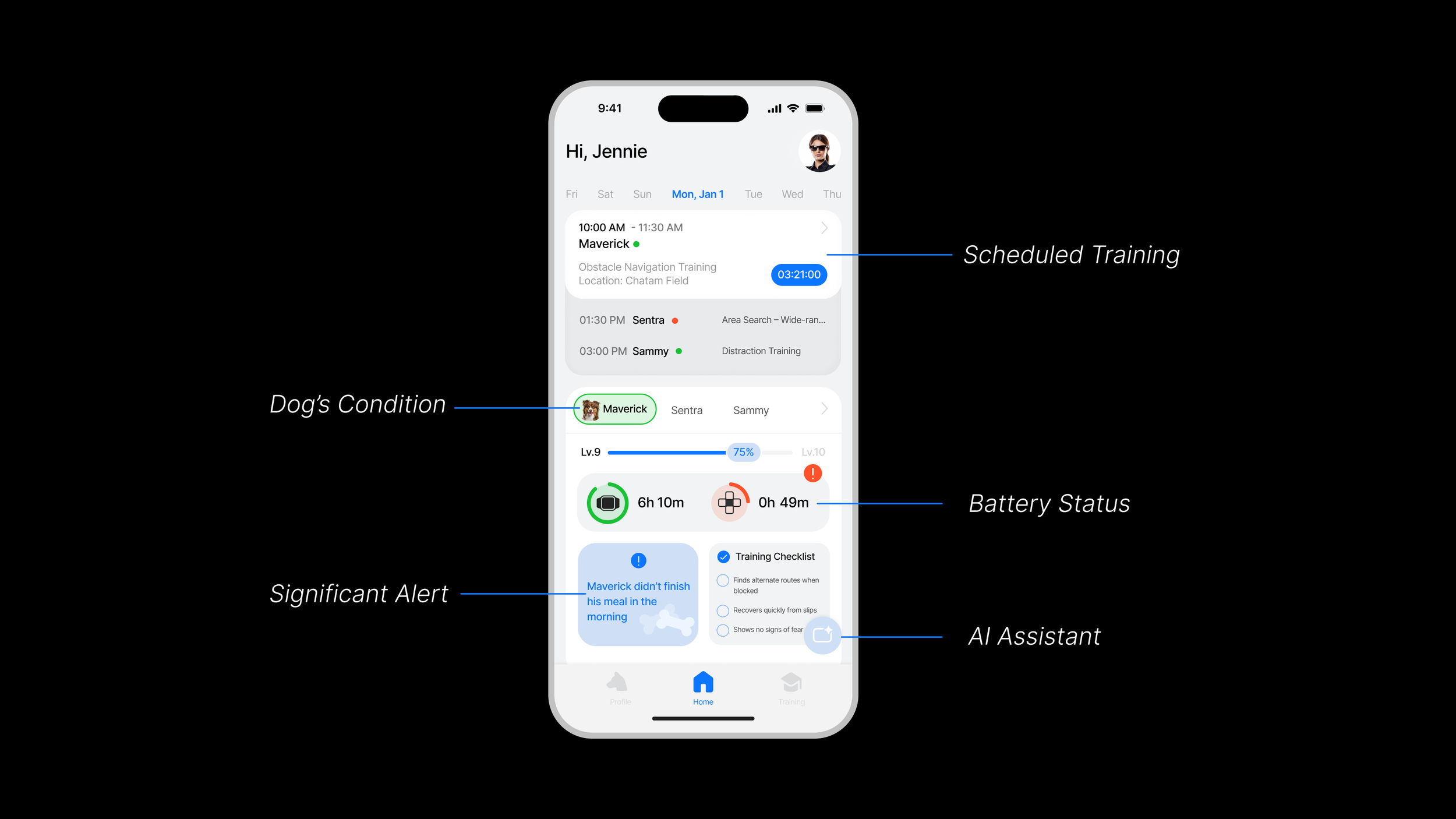
Main Screens
Dashboard | Live Session | Training Progress | Wellness Overview | AI Suggestion Prompt
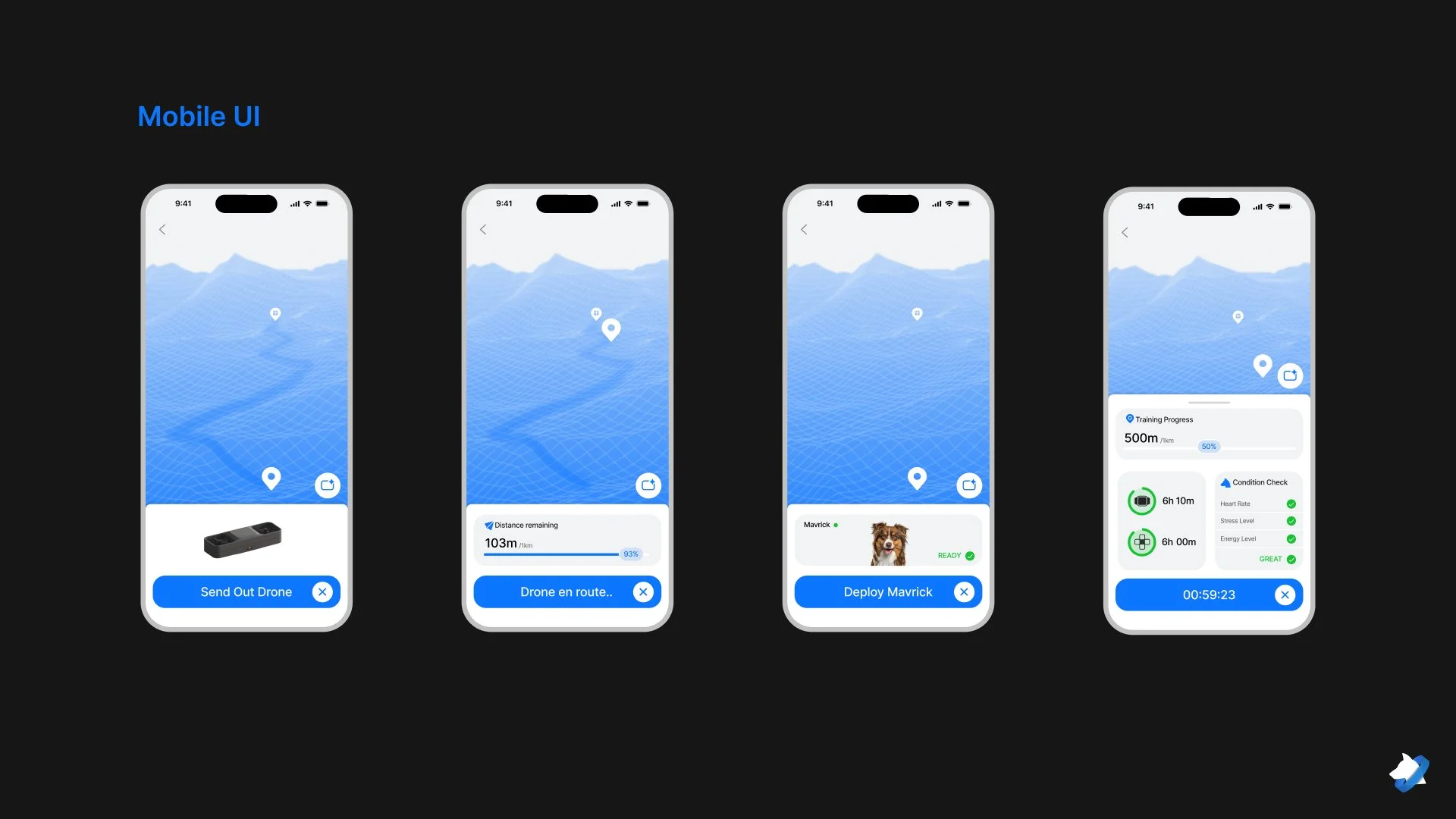
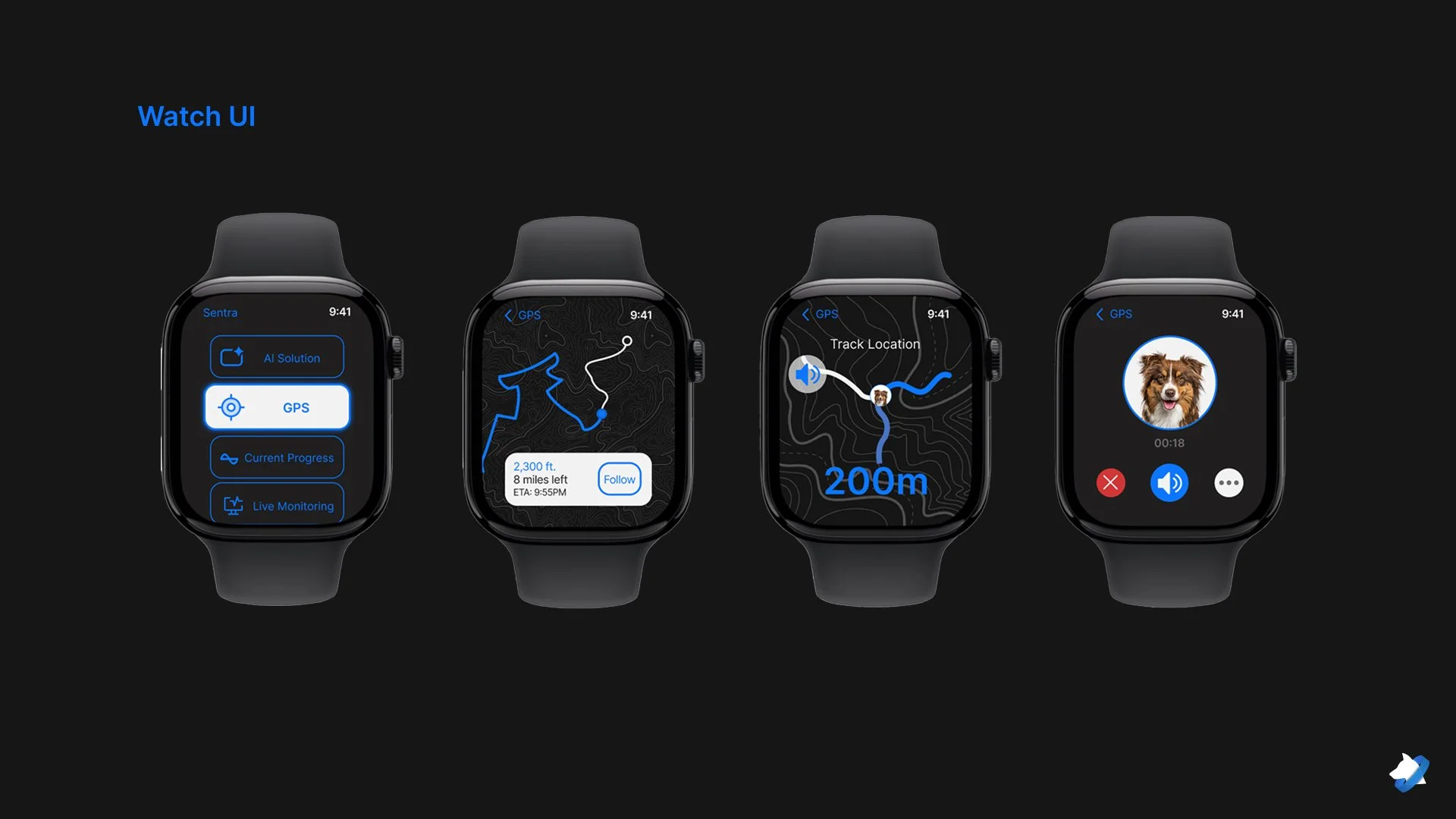
Final Design
Key Features
Real-time condition tracking
AI-guided feedback and suggestions
Integrated drone control and route overview
Session summaries with performance metrics
Impact
Sentra enhances situational awareness, reduces preparation time, and improves training efficiency by helping handlers stay informed and emotionally connected.
Reflection
This project taught me how AI can support—not replace—human instinct in high-stakes environments. It challenged me to design technology that feels like a partner, not a tool.
Takeaways
Clarity builds confidence in complex environments.
Simple data visualization enables faster decisions.
Emotionally sensitive design strengthens human–machine trust.